
The ETRM Workflow - Properly Capturing and Tracking Project Requirements
GeneralThe Concept: Transparency through Structure
In modern engineering, projects rarely fail due to a lack of technical expertise, but rather due to lack of communication and unclear requirements. The ETRM concept addresses exactly this: it centralizes all technical and contractual requirements in a single instance.
The goal is to establish the "Single Point of Truth" as early as possible. By linking initial capture, versioned processing, and automated deviation tracking, changes become immediately visible and assessable for all stakeholders – from the client and project manager to the engineer.
The ETRM Workflow
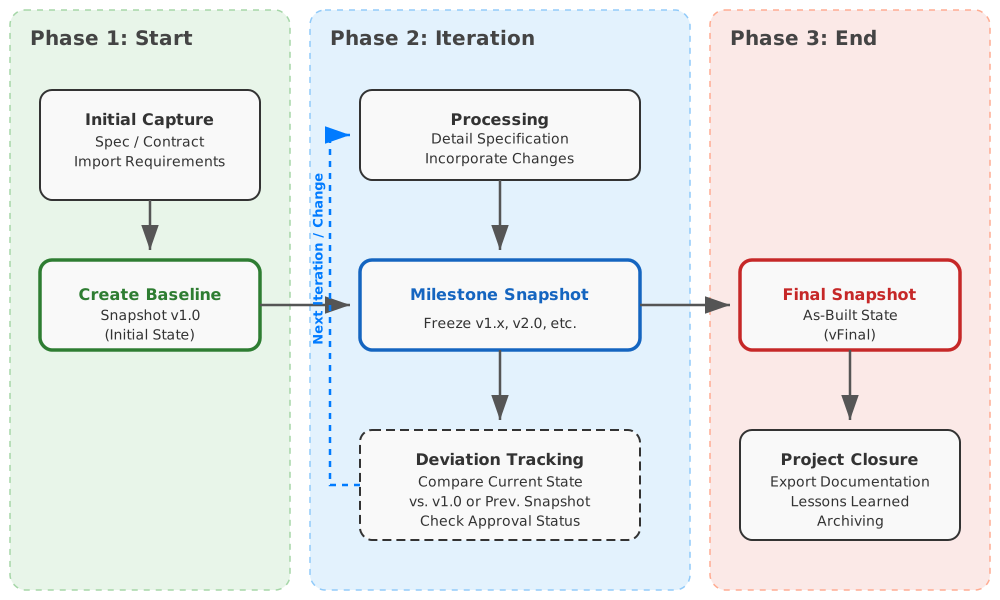
The following workflow describes the iterative process from the initial requirements list to the final project closure.
Phase Description
Phase 1: Project Start (Setup)
In this phase, the course is set. Requirements are imported from various sources (e.g., Excel lists, PDF contracts). Once the contracting parties have agreed on a status, the Baseline v1.0 is created. This prevents the dreaded "Requirement Creep" (the uncontrolled growth of requirements without budget adjustment).
Phase 2: Iterative Execution
Projects are dynamic. Engineers detail requirements, and clients change their requests.
- Snapshot Principle: A snapshot is created at every important milestone.
- Delta Analysis: The system compares the current status with the baseline. This makes it immediately transparent which changes require additional resources or time.
Phase 3: Completion & Archiving
The process ends with the As-Built Snapshot. It documents exactly what was delivered. By exporting the complete history, the documentation is audit-proof and serves as a valuable basis for future projects ("Lessons Learned").